
I had the need to represent time as a fraction of a year, so I came up with this little program to do the conversion for me. (using in Redlion Crimson 3) Continue reading
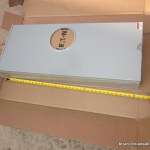
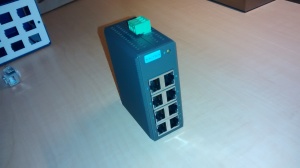 I am on a quest to convince people, especially controls and automation people, to stop crimping RJ-45 ends on Ethernet cables. Everyone else in the world terminates Ethernet to a punchdown block jack and then uses a pre-tested, pre-molded patch cable to connect to the device. The reason to avoid crimping on the RJ-45’s is that it is difficult to reliably crimp the ends on correctly, especially if you have to use an electrician who would rather be bending 3″ rigid conduit and is trying to use the Mickey Mouse crimp tool he bought at the dollar store.
 The grandson thought about it for a minute and then asked his grandfather, “Which wolf will win?”
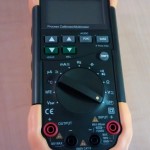 For about 1/4 the cost of a Fluke, I decided to take a risk and buy a Chinese process meter. This company makes a clone of the 787, but I opted for the YHS-302A model (which now seems to be the YHS 7011) because it seemed to have more bells and whistles. (see bottom of article for update)
Subscribe to Blog via Email
Recent Comments
- Adding Low Oil Pressure Safety Stop to Kohler 7000 | Brian Gallimore's Blog on Wiring Schematic for Bad Boy ZTE Mower
- Philmont Scout Ranch Backpacking Trek 2026 | Brian Gallimore's Blog on Philmont Scout Ranch Backpacking Trek
- Elaine on Undocumented Secrets of Integrating BACnet MSTP
- Kent Hervey on Interior trailer lights
- Hector Flores on Quadrasteer / Dana 60 Rebuild How-To (ring, pinion, carrier replacement)
Top Posts
- Quadrasteer / Dana 60 Axle Differences and Similarities
- Wiring Schematic for Bad Boy ZTE Mower
- Quadzilla
- Troy Bilt Chipper Shredder Review
- It's the Dem's Fault!
- Time Average in Ladder Logic (ControlLogix AOI)
- Ron Paul Posters and Propaganda
- News and Links - February 13, 2013
- Bryson's First Airplane Ride
- Partitioning a USB Drive
Resume
Bookmarks
Archives
Categories
-
Recent Posts
-

Meta